
For any systems integrator, there is one sound that is extremely frightening: the sound of water sloshing inside your network equipment.
The true cost of water ingress in an outdoor wireless access point (AP) is substantial. You not only have to replace the hardware, but you also have to pay technicians to climb a 20-foot pole to perform the replacement, all while apologizing to angry clients who were frustrated by the network outage.
Many buyers see the word “waterproof” on a product specification sheet and assume the device is invincible. However, in the B2B networking world, “waterproof” is just a marketing term; the IP (Ingress Protection) rating is the real engineering guarantee.
If you are sourcing outdoor APs or wireless CPE bridges from Toda, you will frequently see two protection ratings: IP65 and IP67. Here is a detailed breakdown of what these numbers actually mean in practical applications, and which rating you should choose for your next project.
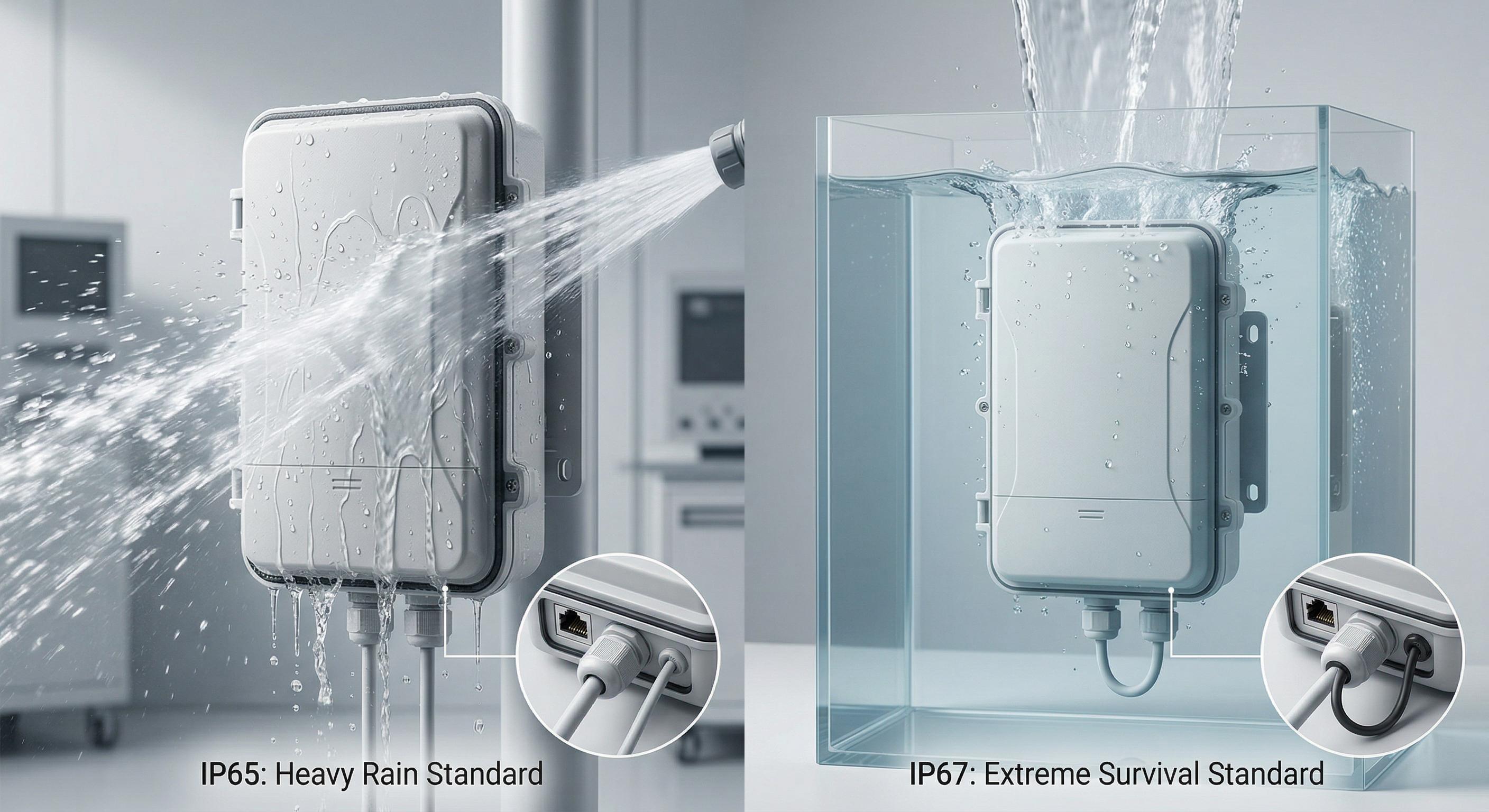
Cracking the Code: What Do the Numbers Mean?
“IP” stands for Ingress Protection. The two numbers that follow specify the exact level of protection the hardware enclosure provides against solids and liquids.
-
The First Number (Solid Protection): Both IP65 and IP67 begin with a “6″. This is the highest possible level of solid protection. It means the AP is completely dust-tight. No sand, dirt, or warehouse dust can enter the PCBA board.
-
The Second Number (Liquid Protection): This is where the engineering—and the price difference—comes into play.
IP65: The Rainstorm Standard
An IP65 rating means the device is protected against low-pressure water jets from any direction.
-
Real-World Meaning: If the AP experiences a severe thunderstorm with heavy rain hitting it sideways, it will survive. It will also remain unharmed if a landscaper accidentally sprays it with a standard garden hose.
-
Best Used In: Covered outdoor terraces, under building eaves, standard parking lots, outdoor cafes, and school courtyards.
-
The Toda Advantage: IP65 APs offer exceptional value. For 80% of standard commercial deployments in mild climates, paying for a higher protection level would be a waste of the customer’s budget. Toda’s IP65 housings are also UV-stabilized to prevent the plastic from cracking due to prolonged sun exposure.
IP67: The Extreme Survival Standard
An IP67 rating means the device can withstand temporary immersion in water (up to 1 meter deep for 30 minutes).
-
Real-World Meaning: Nobody installs Wi-Fi underwater. However, the IP67 rating is crucial because it requires extremely tight seals and gaskets. This prevents moisture from seeping in during extreme temperature fluctuations, completely eliminating internal condensation. It can withstand the impact of high-pressure washers and the rigors of tropical monsoons.
-
Best Used In: Docks and marinas (where salt spray is highly corrosive), ski resorts (rapid snow melting and freezing), industrial mining sites, and fully exposed utility poles in harsh coastal climates.
-
The Toda Advantage: Building true IP67 equipment requires die-cast metal casings or high-strength industrial plastics, equipped with dedicated Gore-Tex breather valves (for pressure equalization to prevent water vacuuming). Toda’s IP67 series is engineered for zero-maintenance longevity.
The Invisible Killer: Installation Errors
Toda’s engineering team will tell you a harsh reality: Even IP67 APs will flood if installers make mistakes.
Most water damage is not caused by a cracked plastic casing; it occurs at the cable entry point.
-
Missing Weatherproof Glands: The RJ45 Ethernet port on every Toda outdoor AP comes with a rubber sealing gland (waterproof kit). If a technician forgets to tighten it completely, water will travel down the outside of the cable and seep directly into the port.
-
Missing Drip Loops: If the Ethernet cable runs straight down a wall and directly into the top of the AP, water will use the cable like a highway. Always create a “Drip Loop”—a U-shaped bend in the cable just below the AP—so that gravity forces the rainwater to drip off the cable before it ever reaches the connector.
Summary: Which One Should You Buy?
When building your Bill of Materials (BOM) for inventory or project planning:
-
Choose IP65 to gain a competitive edge in bidding for standard commercial projects (schools, suburban parks, residential complexes) where you need to strike a perfect balance between reliable weather protection and cost-efficiency.
-
Choose IP67 for high-profit industrial projects (ports, factories, extreme weather zones) where a single hardware failure could result in thousands of dollars in operational downtime losses.
At Toda, we don’t just sell you a plastic box; we engineer shields to protect your reputation.
Need help choosing the right outdoor hardware? Send the details of your next deployment environment to the Toda sales team, and we will recommend the most suitable outdoor Wi-Fi or CPE solution for your exact needs.
Post time: Mar-27-2026


