
“Industrial” can describe a switch's mounting, electrical features or operating-temperature capability. It does not automatically mean the device can be mounted in rain. For an IP40 switch, the outdoor installation question begins with the surrounding enclosure and the completed cable entries.
The second digit in IP40 is zero: that code does not establish protection against water ingress. Schneider Electric's IP40 and IP65 explanation makes this distinction explicit. A wide operating-temperature range does not change the water-protection meaning of the IP code.
An IP40 device may still be part of a suitable outdoor system when installed within an appropriately designed and verified protective assembly. The procurement task is to specify that assembly, rather than treating the switch's metal housing as a complete weatherproof solution.
Read the two IP digits separately
The first digit concerns access and solid-object protection; the second concerns water protection under specified tests. The code is not a single score where a larger combined number universally means a better outdoor product.
For IP40, the first digit addresses solid objects of the relevant size, but it is not a dust-tight claim. The zero in the second position provides no rated water protection. When dust or water is a site requirement, document the required protection and the conditions under which the completed enclosure provides it.
The Swedish electrical-safety authority's IP-code explanation is a useful reference for reading the code. Avoid treating an IP designation as a universal substitute for all environmental requirements, including corrosion, UV exposure or condensation control.
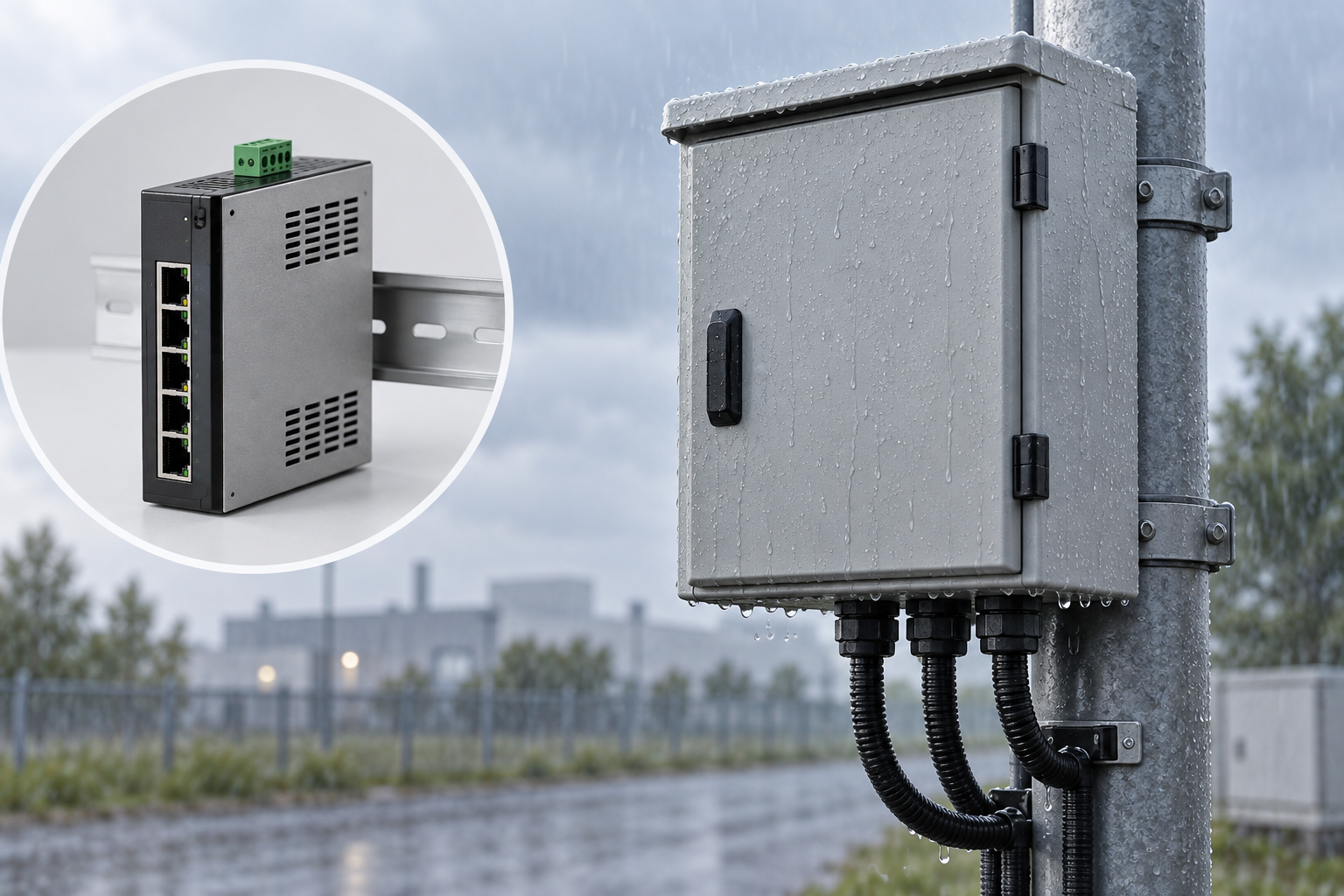
Specify the site before choosing a cabinet rating
Describe the actual exposure: sheltered wall, open pole, roadside cabinet, dusty production area or a location subject to cleaning spray. Record the relevant ambient conditions, solar exposure and maintenance access. The enclosure supplier can then propose a suitable assembly and state its limits.
Do not choose an arbitrary rating solely because it is common in another project. Different water tests represent different conditions, and an enclosure's suitability also depends on its material, mounting and accessories. Where a project specification or applicable installation requirement governs the choice, use that requirement in the procurement review.
Include the expected life and maintenance environment. A cabinet that performs correctly when new may depend on periodic seal inspection, filter replacement or other service. If access requires a lift or a site shutdown, that maintenance requirement affects the system's operating cost.
The enclosure is only as complete as its penetrations
An empty enclosure's rating does not automatically describe the finished installation after drilling, gland fitting and cable entry. Use the enclosure manufacturer's approved accessory and assembly instructions, including the relevant cable-diameter range and sealing arrangement.
Check unused openings, door seals and the mounting interfaces as well as the obvious cable glands. A small spare hole or poorly matched gland can undermine the intended protection. Keep the as-built entry schedule with the cabinet documentation so future additions receive the same review.
Cable routing also needs to match the site. The cable, connector and protective route should be suitable for the environment in which each is installed. A weather-resistant cabinet does not make an exposed indoor patch lead suitable for long-term outdoor service.
| Review item | Evidence to retain | Typical handover gap |
|---|---|---|
| Cabinet and door assembly | Exact model and approved installation instructions | Only the empty enclosure brochure is retained |
| Glands and blanking accessories | Part numbers, cable sizes and completed entry record | Later cables are added without reviewing the seal |
| Internal network components | Temperature and humidity requirements | The switch's range is assumed to cover every accessory |
| Climate-control equipment | Capacity, settings and service requirements | Filters or controls have no assigned maintenance owner |
| Field condition | Photographs and inspection results | The accepted arrangement cannot be reproduced |
Sealing and heat removal must be designed together
Protecting the equipment from ingress can change how the enclosure rejects heat. The switch, supply and other internal devices dissipate energy. Solar exposure can add another burden. An enclosure selected only for water protection may need a separate thermal solution.
Calculate internal dissipation using the correct boundary. Power delivered to cameras outside the cabinet is not all released as heat beside the switch; supply and switch losses remain inside. Include other equipment and review the enclosure's specified heat-removal method.
Then verify the local conditions at the components under the required load. Do not rely on an open-door test to represent a sealed operating cabinet. If cooling uses air exchange, review how the chosen accessories preserve the required environmental protection. Avoid solving overheating by making unreviewed holes in a cabinet whose sealing was part of the accepted design.
Condensation can appear without a rain leak
Moisture inside an enclosure can condense when surfaces cool sufficiently. This is a different mechanism from rain entering through an opening. Rittal's discussion of enclosure condensation describes the dew-point relationship and approaches to managing the internal condition.
For networking equipment specified for non-condensing operation, consider temperature changes during shutdown, overnight cooling and maintenance. Record how the enclosure design addresses the relevant case. A heater, cooling arrangement or approved pressure-management accessory may form part of a solution, but the choice must suit the actual cabinet and environment.
The operational plan matters too. Repeatedly opening a cabinet in wet or humid conditions can alter the interior environment. Include inspection and resealing procedures in the maintenance handover so the accepted protection is maintained after the first service visit.
Separate environmental protection from electrical protection
Ingress protection does not establish surge immunity, grounding arrangements or the suitability of an exposed copper route. Those requirements belong in the project's electrical and network design alongside the enclosure selection.
For example, a fiber uplink changes the data connection between locations but does not eliminate the remote cabinet's power requirements. The local supply, protective arrangement and connected copper endpoints still need review. A metal enclosure alone does not settle those questions.
When comparing products, request evidence against the exact requirement rather than accepting a cluster of unrelated labels. A temperature claim, an EMC test reference and an IP designation each describe different aspects of the product or assembly. None should be used as shorthand for the other two.
Inspect the finished cabinet before site acceptance
Compare the completed build with the approved drawing and accessory list. Check the intended closures, cable entries, mounting orientation and component clearances. Review the relevant temperature measurements and verify the required network service under the specified load.
Use the appropriate documented inspection or test procedure for the assembly. An informal spray with a hose is not a substitute for a defined ingress-protection test and can expose equipment to conditions the project never specified. If formal verification is required, arrange it with the responsible supplier or qualified test provider.
Record discrepancies before handover and recheck the affected requirement after correction. A replaced gland may require a renewed sealing review; a moved supply may require a renewed thermal check. Keep the evidence tied to the final build rather than to an earlier prototype.
Put the enclosure requirement in the switch inquiry
When requesting a TODAHIKA industrial Ethernet switch for an outdoor project, describe the intended cabinet, site exposure, internal temperature and connected equipment. Ask for the exact switch configuration and environmental limits that must be maintained around it.
If the cabinet is supplied by another party, identify who is responsible for the completed environmental design and verification. That prevents a common gap in which the switch supplier confirms the device and the enclosure supplier confirms the empty box, while nobody confirms the assembled system.
The useful purchasing result is a complete installation with defined conditions, evidence and maintenance responsibilities. IP40 remains an accurate description of the component; the outdoor suitability comes from the verified system built around it.
Post time: Oct-01-2026


